
7 Best AI Film Production Platforms in 2026: From Storyboard to Cinematic Scenes
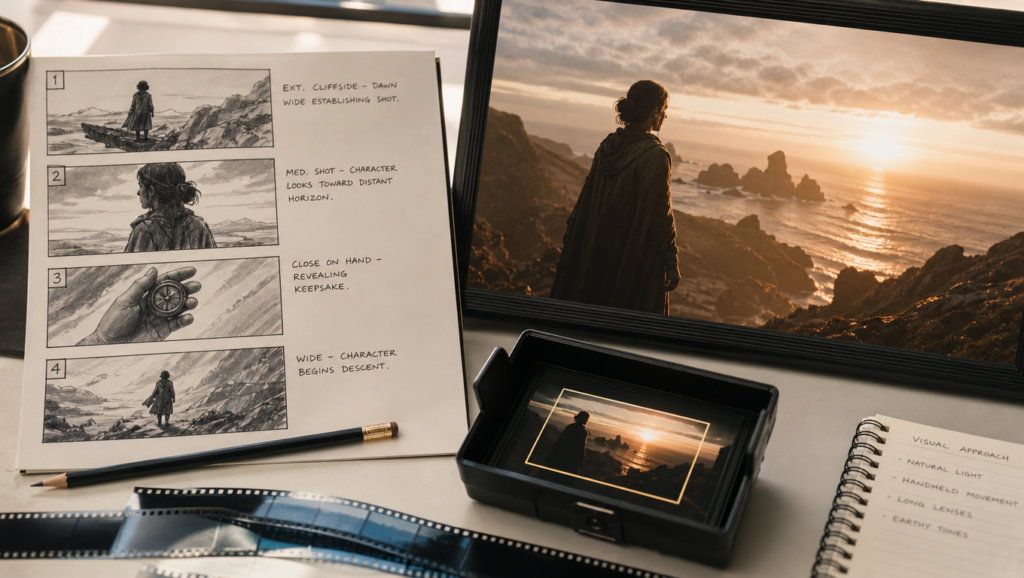
AI filmmaking has moved past one-off 5-second clips. In 2026, the real question is not whether a model can generate a pretty shot — it is whether you can run a full production loop: story, boards, camera intent, performance direction, and scene generation without losing creative control.
This ranking focuses on AI film production platforms and frontier models that serious creators actually use for cinematic work. Direct lookalike marketing tools are intentionally left out. Instead, the list mixes one full studio workflow with the industry’s most authoritative generation engines.
What Separates an AI Film Platform From a Clip Generator
Before the ranking, use these criteria:
- Story-to-shot workflow — Can you move from concept to storyboard to generated scenes in one system?
- Cinematic control — Camera language, framing, continuity, and shot planning matter more than random beauty
- Motion and physics quality — Characters, environments, and camera moves need to hold up in edit
- Model authority — Is the underlying engine considered frontier-grade in 2026?
- Iteration speed — Can directors test multiple scene directions without restarting production?
- Output usefulness — Are clips usable in trailers, short films, commercials, and narrative sequences?
Quick Ranking Overview
|
Rank |
Platform / Model |
Best For |
|
1 |
Topview Film Studio |
Complete AI film production workflow |
|
2 |
Kling AI |
Cinematic motion and multi-shot continuity |
|
3 |
Google Gemini Omni |
Multimodal direction and scene understanding |
|
4 |
Google Veo |
Photorealistic cinematic generation |
|
5 |
Runway |
Precision camera and motion control |
|
6 |
Luma Ray |
Spatial depth and 3D-feeling camera moves |
|
7 |
MiniMax Hailuo |
Fast high-volume cinematic drafts |
 1. Topview Film Studio — Best Overall AI Film Production Platform
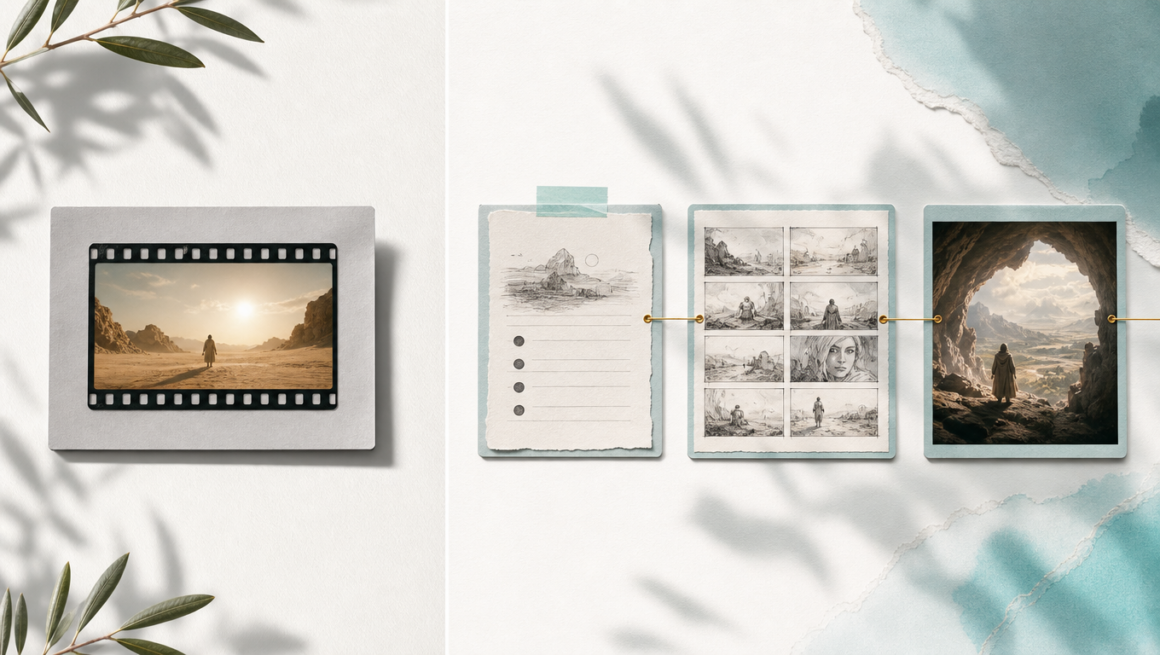
If you want more than a single generate button, Topview Film Studio is the clearest #1 in this ranking.
Most AI “film” tools are really model front-ends: write a prompt, get a clip, start over. Film Studio is built as a connected AI filmmaking workspace across the stages directors actually care about:
- Story development
- Storyboards
- Camera planning
- Performance direction
- Cinematic scene generation
The product positioning is simple and strong: you stay the director while AI creates the images and motion for each AI film. That matters because cinematic work fails when creators lose authorship between disconnected tools.
Why it ranks first
1) Full-stage film workflow, not isolated generation Film Studio connects storyboards, camera planning, and production design into one creation path. That is closer to a studio pipeline than a novelty clip maker.
2) Director-first control Instead of forcing you to surrender the film to a black-box prompt, the workspace is designed so creative intent — story beats, framing, performance — stays upstream of generation.
3) Built for complete AI film creation Whether you are building a short narrative sequence, a cinematic commercial, or a trailer-style cutdown, the value is continuity across stages: board → plan → shoot with AI → iterate.
4) Practical for teams that ship films, not demos A frontier model alone can give you a beautiful 8-second shot. A film studio workflow helps you assemble many shots into a coherent piece.
Best for: Filmmakers, agencies, and creative teams who need an end-to-end AI film production environment.
Limitations: Users who only want one quick social clip may prefer a single-model playground. Film Studio is strongest when you are producing multi-shot cinematic work.
2. Kling AI — Best for Cinematic Motion and Multi-Shot Continuity
Kling has become one of the most authoritative engines in AI filmmaking for motion realism, physical continuity, and multi-shot storytelling. It is widely used when directors need characters and camera movement to feel intentional across a sequence.
Strengths
- Strong cinematic motion and physics feel
- Useful for multi-shot storyboarded sequences
- Competitive quality for narrative and action-style beats
Weaknesses
- More of a generation engine than a full director workspace
- Shot planning, boards, and production structure still live elsewhere
Best for: Scene generation where motion quality and continuity are the priority.
3. Google Gemini Omni — Best Multimodal Direction Layer
Gemini Omni represents the multimodal side of Google’s creative stack: combining visual understanding with generative direction. For AI film work, that matters when you want the system to interpret references, scene intent, and cross-modal instructions rather than treating every shot as an isolated text prompt.
Strengths
- Strong multimodal comprehension for creative direction
- Useful when films depend on reference-driven scene logic
- Fits teams already working inside Google’s AI ecosystem
Weaknesses
- Not a dedicated film-studio production board by itself
- Directors still need a structured workspace for storyboards and shot lists
Best for: Multimodal scene direction and reference-aware creative exploration.
4. Google Veo — Best for Photorealistic Cinematic Generation
Veo remains one of the most respected names for high-fidelity cinematic visuals. When the brief is “make this look like a real camera captured it,” Veo is still a first-call engine in many professional evaluations.
Strengths
- High photorealism and cinematic image quality
- Strong choice for hero shots and environment-heavy scenes
- Native audio capabilities in recent versions improve finished-clip usefulness
Weaknesses
- Generation quality does not automatically equal production workflow
- Multi-stage film planning still requires an external studio process
Best for: Hero cinematic shots where visual fidelity is non-negotiable.
5. Runway — Best for Precision Camera and Motion Control
Runway earned its place in AI filmmaking by treating generation as part of a controlled creative process. Motion direction, camera language, and iterative refinement make it a favorite when directors need granular control rather than one-shot luck.
Strengths
- Strong creative control for camera and motion
- Familiar to professional editors and filmmakers
- Excellent for iterative shot refinement
Weaknesses
- More control-heavy than beginner-friendly
- Still centered on generation/editing more than full story-to-board studio planning
Best for: Filmmakers who want precise motion and camera authorship.
6. Luma Ray — Best for Spatial Depth and Camera Presence
Luma’s models are often chosen when a scene needs dimensional believability — camera moves that feel like they travel through space rather than across a flat image plane.
Strengths
- Convincing depth and spatial camera motion
- Strong for environment exploration and cinematic fly-throughs
- Useful for establishing shots with 3D presence
Weaknesses
- Less complete as a full narrative production suite
- Character-heavy dialogue scenes may need complementary tools
Best for: Spatially rich establishing shots and camera-driven sequences.
7. MiniMax Hailuo — Best for Fast Cinematic Drafting at Volume
Hailuo has earned authority as a fast, practical generator for teams that need many cinematic drafts quickly. It is not always the final hero-shot engine, but it is valuable in early film exploration.
Strengths
- Fast iteration for concept and draft scenes
- Useful when volume matters in previsualization
- Accessible entry point for cinematic experimentation
Weaknesses
- Less of a complete film-studio operating system
- Final polish often still moves to a higher-control workflow
Best for: Rapid scene drafting before committing to final cinematic passes.
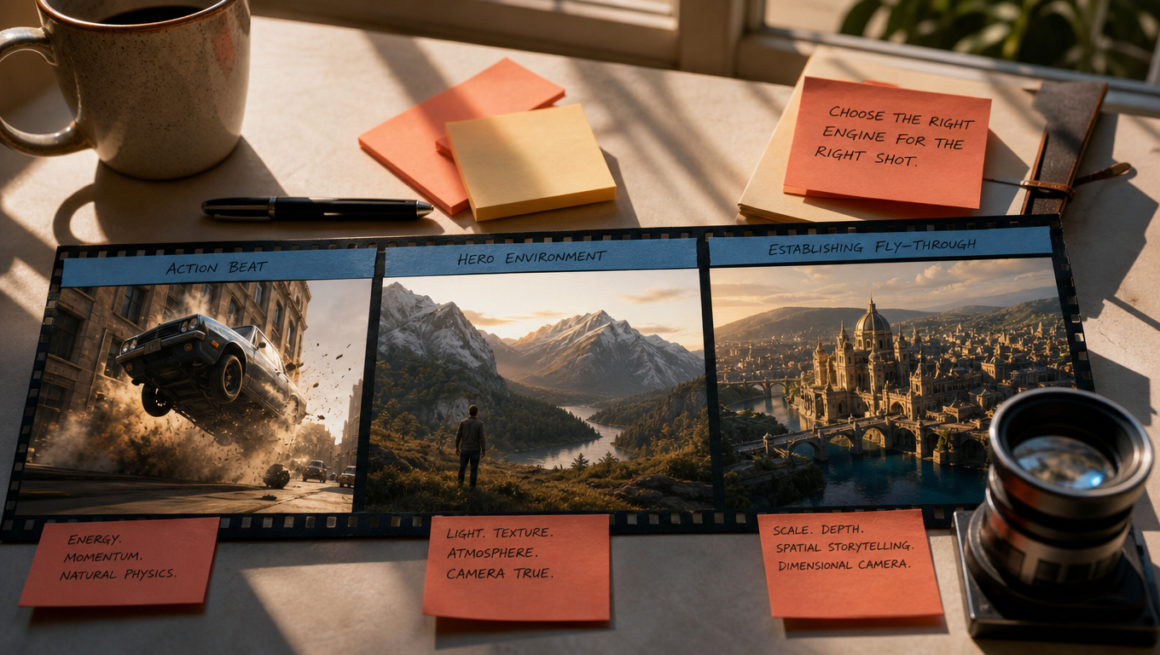
How to Choose the Right AI Film Setup
|
Your priority |
Start here |
|
Full storyboard-to-scene film workflow |
Topview Film Studio |
|
Motion realism and multi-shot continuity |
Kling AI |
|
Multimodal reference-driven direction |
Gemini Omni |
|
Maximum photoreal hero shots |
Google Veo |
|
Precise camera/motion authorship |
Runway |
|
Spatial camera presence |
Luma Ray |
|
Fast draft volume |
MiniMax Hailuo |
A practical 2026 stack for many teams:
That is why a connected studio platform ranks above any single model in this list.
Final Verdict
If you only need one beautiful clip, pick a frontier engine and ship.
If you need to make AI films — with story development, storyboards, camera planning, performance direction, and cinematic scene generation in one connected workflow — Topview Film Studio is the best overall AI film production platform in this ranking.
The models around it remain essential. Kling, Gemini Omni, Veo, Runway, Luma, and Hailuo each win specific cinematic jobs. But production is more than generation, and Film Studio is built for that larger job: keeping you in the director’s chair while AI creates the images and motion.
About Author

 What Happens in the 300 Milliseconds Between “Spin” and the Result
  The Shipment That Turns an Ordinary Highway Into a Moving Puzzle
  Payment for Order Flow