
How to Use Skin Quiz Builder for Personalized Product Results
Most people have bought a moisturizer they didn’t need, a serum that caused breakouts, or a cleanser that left their face feeling like sandpaper. It happens — because skincare without proper guidance is a guessing game. A skin quiz for products changes that dynamic entirely. It asks the right questions and matches each person with recommendations that actually fit their skin. For brands, it does the same while converting browsers into buyers.
This article breaks down how skin quiz builders work, what questions matter most, and how to set one up so that both shoppers and businesses get real results.
Q: What Exactly Is a Skin Quiz for Products?
A: A skin quiz for products is an interactive questionnaire that collects information about a person’s skin type, concerns, goals, and lifestyle — then uses those answers to recommend specific products or routines. Think of it as a virtual esthetician. Instead of a one-size-fits-all product page, the shopper gets a curated regimen that feels built for them.
These quizzes live on brand websites, in apps, or as embedded tools in e-commerce stores. They typically cover five to eight questions and take under three minutes to complete. The output is a results page linking directly to recommended products — often with an option to add them to the cart or request free samples.
A well-known example: the Mario Badescu Skin Analysis Quiz, one of the most referenced tools in the skincare space. Mario Badescu describes their quiz as a way for shoppers to “discover award-winning, targeted solutions and personalized skin care that’s simple and effective.”
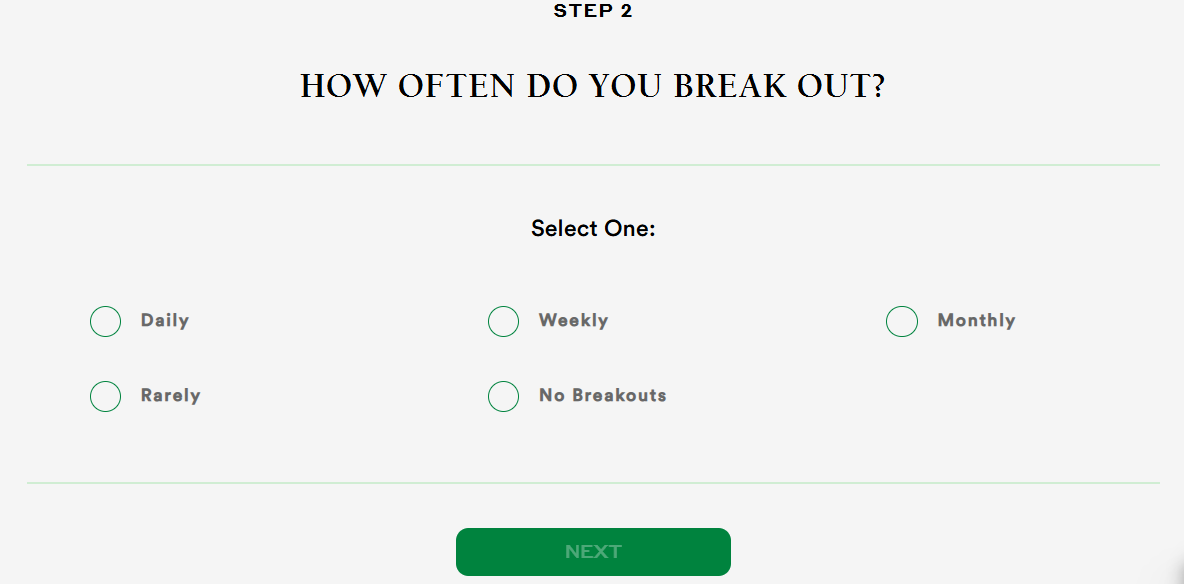
The quiz pairs each user with a cleanser, toner, moisturizer, and specialty serums suited to their specific skin concerns — and links directly to a cart drawer, making the purchase path as simple as possible. The result page also displays product reviews, adding an extra layer of buyer confidence. Their integration with Klaviyo means every quiz taker gets emailed their recommended regimen and can be segmented into targeted follow-up flows.
Try it yourself: Take the Mario Badescu Skin Analysis Quiz to see what a well-built skin quiz experience looks like in practice.
Q: Why Do Skin Analysis Quizzes Actually Work?
A: The core reason is relevance. When someone receives a recommendation tailored to their skin type, concerns, and preferences, they trust it more — and they’re more likely to buy.
A skin analysis quiz reduces what’s known in UX as “decision fatigue.” With hundreds of products available on most skincare sites, shoppers often leave without buying anything simply because the choice is overwhelming. The quiz removes that burden by doing the filtering for them.
The data support this. According to RevenueHunt, a product quiz platform trusted by over 20,000 brands, stores using quiz tools see conversion rates rise from the typical 2% to as high as 5%, along with a 20% increase in average order value post-quiz. Interact’s quiz conversion data shows average quiz completion rates between 37.6% and 55.5% — substantially higher than the standard e-commerce conversion average of 2–4%.
There’s also the matter of returns. When customers buy the right product from the start, return rates drop. That’s good for both shopper satisfaction and brand margins.
What Shoppers Actually Gain
A good skin quiz does three things for the person taking it:
- Saves time — no scrolling through dozens of products hoping something fits
- Builds confidence — a personalized recommendation removes the fear of wasting money on the wrong thing
- Creates a routine framework — most quizzes recommend a multi-step regimen, not just a single product
Q: What Questions Should a Skin Analysis Quiz Include?
A: The question set is everything. Too few questions, and the recommendations feel generic. Too many and people quit before finishing. Research from Visual Quiz Builder, which built the Mario Badescu quiz, notes that beyond 6–8 questions, completion rates and conversions both drop.
Here’s what a well-structured skin analysis quiz typically covers:
Each question should have conditional logic built in — meaning the next question adapts based on the previous answer. Someone who selects “acne-prone” shouldn’t see the same follow-up as someone who selects “dry and aging.” This branching is what separates a smart quiz from a basic form.
Q: How Do You Build a Skin Quiz for Products as a Brand?
A: Building a skin quiz for products involves choosing the right platform, defining your logic, designing your results, and connecting the output to your store or email system.
Step 1: Choose a Quiz Builder
Several platforms specialize in this:
- Visual Quiz Builder (VQB) — designed specifically for Shopify brands, supports Klaviyo integration, and result pages linked directly to cart drawers
- Octane AI — popular with DTC brands, supports conditional logic and email capture
- RevenueHunt — drag-and-drop builder, no coding required, works across niches
The right platform depends on your tech stack. Shopify brands have the widest range of native integrations.
Step 2: Map Your Question Logic
Before touching any builder, map out which product results each answer combination should trigger. This is best done in a spreadsheet. For a skincare brand with 30+ products, the mapping takes time — but it’s the single most important factor in whether the quiz gives accurate recommendations.
Step 3: Design the Results Page
The results page is where the conversion happens. It should include:
- The recommended products with clear descriptions
- An option to add products directly to the cart (or request free samples)
- Real product reviews tied to the recommendation
- A follow-up email opt-in to send the regimen later
According to research on AI-powered personalization in beauty e-commerce, AI-driven personalization tools — including quiz-based finders — can improve conversion rates by up to 50% and increase basket size when implemented well.
Step 4: Integrate with Email and SMS
Quiz takers should be added to a segmented email list automatically. Their quiz responses are a goldmine of data. A person who said “acne-prone, age 28, interested in fragrance-free options” can receive a follow-up email series tailored entirely to that profile — not the generic newsletter everyone else gets.
Bloomreach data shows that personalized emails generate up to 6x higher transaction rates than non-personalized messages. The quiz is the data source that makes that personalization possible.
Q: What Common Mistakes Undermine a Skin Quiz?
A: Even well-intentioned quizzes miss the mark when these mistakes appear:
|
Mistake |
Why It Hurts |
How to Fix It |
|
Too many questions |
Users drop off before finishing |
Keep it to 6–8 questions max |
|
Generic results page |
Feels like a product dump, not a recommendation |
Personalize copy and product selection per result |
|
No email capture |
Missed a remarketing opportunity |
Add opt-in at question 4 or 5 (mid-quiz) |
|
No conditional logic |
Wrong products recommended for specific concerns |
Use branching question flows |
|
Poor mobile experience |
Most shoppers are on phones |
Design mobile-first, test on small screens |
One often-overlooked detail: where the quiz lives on the site. The Mario Badescu quiz, for example, is placed in the main navigation menu — which means it’s visible from the first second a visitor arrives. That placement alone drives more completions than a buried footer link ever could.
Q: Can a Skin Quiz Replace a Dermatologist?
A: Not entirely — and the best quiz builders are clear about that boundary. A skin analysis quiz is a product-matching tool, not a medical diagnostic. It helps people find cleansers, moisturizers, and serums suited to their skin type and self-reported concerns.
For prescription-strength treatments — such as tretinoin, antibiotics for cystic acne, or rosacea medications — a licensed dermatologist remains necessary. Brands like Curology have built models where the quiz is the entry point, but a licensed provider reviews the responses before prescribing a formula.
The distinction matters: a product quiz is excellent at matching people with over-the-counter routines; it isn’t equipped to diagnose skin conditions. Framing this clearly on the quiz itself protects both the user and the brand.
For context on how professionals classify skin types, Healthline’s skin type quiz — medically reviewed by a nurse practitioner — walks through the five major skin types and the signals each one shows. It’s a useful reference for anyone building quiz questions or trying to understand their own skin before taking a brand quiz.
The Bigger Picture: Why Personalization Is Now the Standard
Shoppers have changed. They expect a brand to understand their needs — not just list products and hope one fits. A well-built skin quiz for products closes that gap efficiently. It collects the right data, matches it to the right products, and delivers a recommendation experience that feels personal without requiring a one-on-one consultation.
For brands, the benefits extend beyond the first sale: better segmentation, richer customer data, lower return rates, and a built-in reason for shoppers to return. The quiz becomes the beginning of an ongoing relationship, not just a conversion tool.
Whether building from scratch or optimizing an existing quiz, the principles stay the same: ask smart questions, build smart logic, and make the path from result to cart as short as possible.
Frequently Asked Questions
1. How accurate are skin quizzes for product recommendations? Accuracy depends heavily on the quality of the question set and the logic behind the results. Quizzes built on validated dermatology frameworks — like the Baumann Skin Typing System, which has been tested on over 200,000 patients — tend to produce more reliable matches than basic “skin type” pickers. The more specific the questions (including concerns, lifestyle, and ingredient preferences), the more accurate the output.
2. Are skin quizzes only useful for skincare brands? No. The quiz model works well across any category where personalization matters: haircare, supplements, footwear, apparel, and pet products. The core logic — ask questions, match answers to products — applies anywhere choice is overwhelming and personal fit is important.
3. Do I need to give my email to take a skin quiz? Most quizzes make the email opt-in optional, though some gate the results behind it. Brands typically ask for an email mid-quiz rather than at the start, which research shows produces higher opt-in rates. If privacy is a concern, it’s worth reading the brand’s data policy before submitting.
4. Can a skin quiz work for people with multiple skin concerns? Yes — this is actually where a good quiz shines. Multi-concern skin (for example, oily in the T-zone but dry on the cheeks, with occasional breakouts) is notoriously difficult to shop for manually. A well-built quiz with conditional logic handles this by asking follow-up questions that drill into each concern and weighting the results accordingly.
5. How often should someone retake a skin analysis quiz? Skin changes with age, seasons, stress levels, diet, and hormonal shifts. Most estheticians recommend reassessing a routine every few months, or whenever the skin’s behavior changes noticeably. Some brands send automated reminders at 30, 60, or 90 days post-purchase to prompt a routine check-in — which also serves as a natural re-engagement touchpoint.
About Author

 4 Crypto Casinos Where Innovation Goes Beyond Bitcoin
  CSGORoll Promo Code – Best Deposit Bonus for New Players
  The Pragmatic Quantum Horizon: Bridging the Gap Between Noise and Enterprise
Utility
The Pragmatic Quantum Horizon: Bridging the Gap Between Noise and Enterprise
Utility